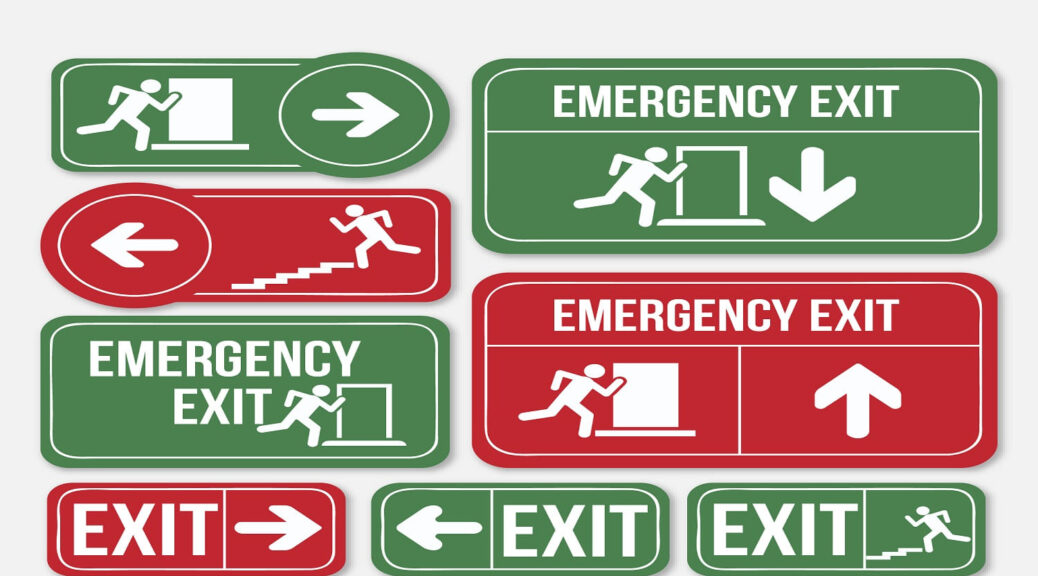
The Importance of Emergency Information Signs in Public Safety
When Grenfell Tower burned, residents followed incorrect evacuation procedures partly because emergency information signs hadn’t been updated to reflect building modifications. That tragedy highlighted a brutal truth – outdated or poorly positioned emergency signage doesn’t just fail to help, it actively kills people during crisis moments.
The Seven-Second Decision Window That Determines Survival
Panic strips away rational thinking within seven seconds of emergency recognition. People revert to muscle memory and visual cues they’ve absorbed subconsciously. Signs positioned at eye level during normal walking trigger automatic responses that higher or lower placements miss entirely. This isn’t theory – it’s documented behaviour from building evacuations worldwide.
Visibility Standards That Actually Matter During Smoke Conditions
British Standard BS 5499 mandates photoluminescent materials, but minimum visibility requirements assume clear air conditions. Smoke reduces visibility to 30cm within minutes of fire start. Signs need 15 times normal brightness levels to remain effective during actual emergencies – something standard installations rarely achieve.
Language Barriers That Create Fatal Delays
Text-heavy signs fail international visitors and workers who comprise 40% of London’s workforce. Universal pictograms communicate instantly across language barriers, but many buildings still rely on English-only emergency instructions. Seconds lost translating instructions become minutes that determine survival outcomes.
Positioning Psychology That Overrides Panic Responses
Exit signs positioned above doorways get missed when people crouch below smoke levels. Floor-level guidance strips lead people to safety when ceiling-mounted signs become invisible. Sign companies specialising in emergency applications understand sight-line psychology that generic signage suppliers miss completely.
Maintenance Realities That Compromise Safety Systems
Emergency lighting batteries fail after three years, but testing schedules often run annually. Photoluminescent materials lose effectiveness when painted over during maintenance work. Regular inspection protocols catch these failures before emergencies expose them – something building managers discover too late during actual incidents.
Legal Liability That Extends Beyond Insurance Coverage
Corporate manslaughter charges apply when inadequate signage contributes to fatalities during emergencies. Directors face personal prosecution under health and safety legislation that insurance policies don’t cover. Proper emergency signage isn’t just regulatory compliance – it’s personal liability protection for decision-makers.
Integration With Modern Safety Systems
Dynamic signs that change messages based on incident location guide people away from danger zones rather than towards them. These systems integrate with fire alarms and security systems to provide real-time evacuation guidance. Static indoor signs can’t adapt when primary escape routes become compromised during emergencies.
Effective emergency information signs represent the difference between organised evacuation and deadly chaos. When panic eliminates rational thinking, properly designed and positioned signage becomes the autopilot that guides people to safety.